
Africa’s 10 Influential Women Social Workers (1871 – 2022)
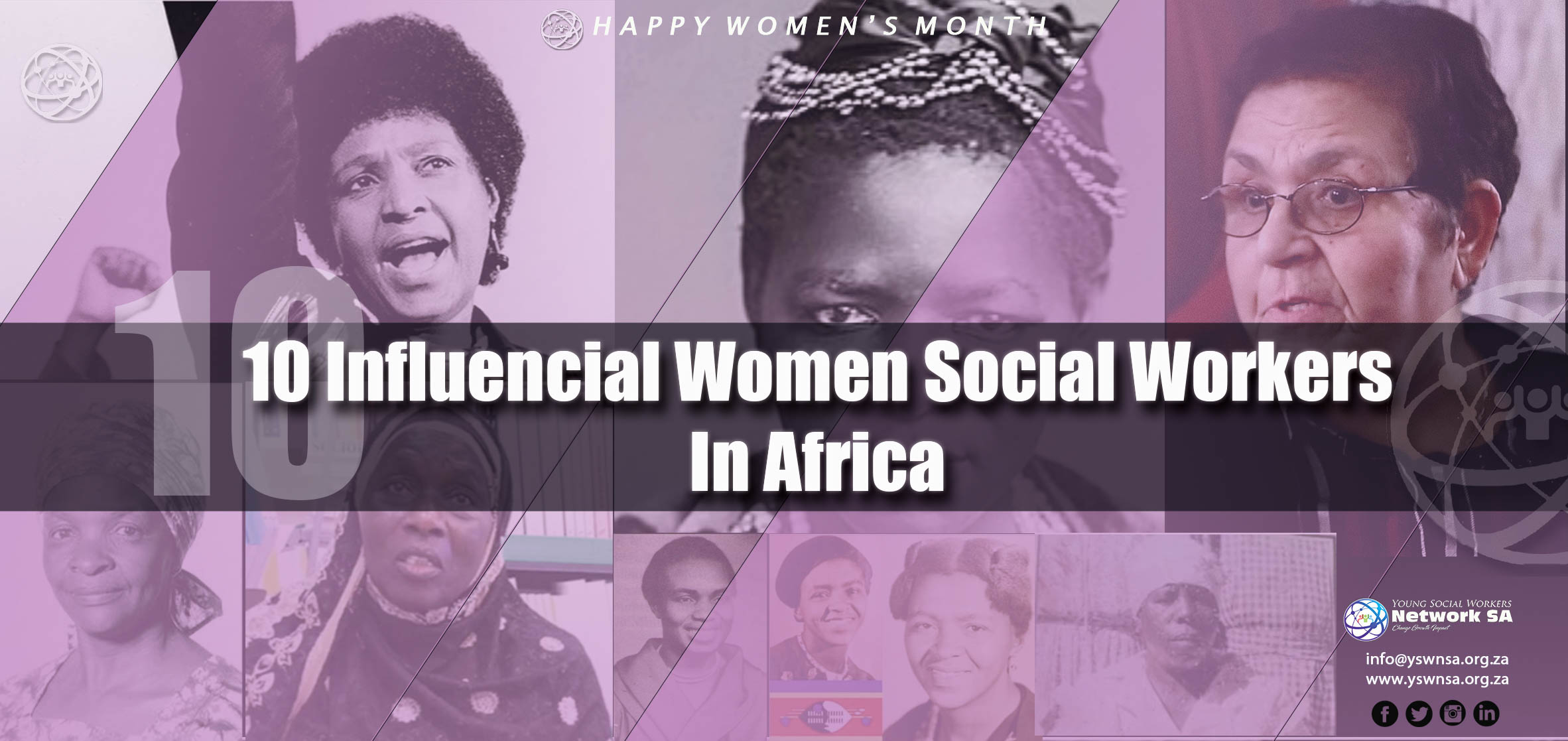
South Africa commemorates Women’s Month in August as a tribute to the more than 20,000 women who marched to the Union Buildings on 9 August 1956 in protest against extending Pass Laws to women. The Government of South Africa declared August women’s month and 9 August is celebrated annually as Women’s Day. In this year’s Women’s Month, As a network, we are celebrating 10 influential African women Social Workers who played a major role in ensuring that Social Work is respected and recognised as a profession in Africa.
Charlotte Makgomo-Mannya Maxeke (1871-1939)

Charlotte Makgomo (née Mannya) Maxeke (7 April 1871 – 16 October 1939) was a South African religious leader, social and political activist; she was the first black woman to graduate with a university degree in South Africa with a B.Sc. from Wilberforce University Ohio in 1903, as well as the first black African woman to graduate from an American university. Charlotte Makgomo (née Mannya) Maxeke was born in Ga-Ramokgopa, Limpopo on 7 April 1871 and grew up in Fort Beaufort, Eastern Cape. She was the daughter of John Kgope Mannya, the son of headman Modidima Mannya of the Batlokwa people, under Chief Mamafa Ramokgopa and Anna Manci, a Xhosa woman from Fort Beaufort. At age 8, she began her primary school classes at a missionary school taught by the Reverend Isaac Wauchope in Uitenhage. She excelled in Dutch and English, mathematics and music. She spent long hours tutoring her less skilled classmates, often with great success. Reverend Wauchope credited Mannya with much of his teaching success particularly with regard to languages. Mannya’s musical prowess was visible at a young age. Describing Charlotte’s singing Rev. Henry Reed Ngcayiya, a minister of the United Church and family friend said: “She had the voice of an angel in heaven. Charlotte became politically active while in the African Methodist Episcopal Church, in which she played a part in bringing to South Africa. While in the AME Church, Maxeke was heavily involved in teaching and preaching the Gospel and advocating education for Africans of South Africa. The church later elected her president of the Women’s Missionary Society.
Shortly after her return to South Africa in 1902, Maxeke began her involvement in anti-colonial politics. She, along with two other individuals from Transvaal, attended an early South African Native National Congress meeting, and was one of the few women present. She was notably the first South African Social worker, appointed as Welfare Officer to the Johannesburg Magisterial Court and involved in juvenile work. Maxeke attended the formal launch of the South African Native National Congress in Bloemfontein in 1912. Maxeke also became active in movements against pass laws through her political activities. During the Bloemfontein anti-pass campaign, Maxeke served as an impetus towards eventual protest by organizing women against the pass laws. Many of Maxeke’s concerns were related to social issues as well as ones that concerned the Church. In Umteteli wa Bantu, a multilingual weekly Johannesburg newspaper, Charlotte wrote in in Xhosa about women’s issues.
In 1918, Maxeke founded the Bantu Women’s League (BWL) which later became part of the African National Congress Women’s League. This decision stemmed from her involvement in anti-pass law demonstrations. The BWL under Maxeke was a grassroots movement that served as a vehicle for taking up grievances from a largely poor and rural base. Maxeke’s BWL also demanded better working conditions for women farm workers. However, the white authorities largely ignored such issues. Furthermore, Maxeke led a delegation to see Louis Botha, who was then South African Prime Minister, to discuss the issue of passes for women. These discussions led to counter-protest the following year, which was ‘’against passes for women. Maxeke and an army of 700 women then marched to the Bloemfontein City Council, where they burned their passes. She addressed an organisation for the voting rights of women the Women’s Reform Club in Pretoria, and also joined the Council of Europeans and Bantus[clarify]. Maxeke was elected as the president of the Women’s missionary society. Maxeke participated with protests related to low wages at Witwatersrand and eventually joined the Industrial and Commercial Workers Union in 1920. Maxeke’s leadership skills prompted the South African Ministry of Education to call her to call her to testify before several government commissions in Johannesburg on matters concerning African education. This was a first for any African of any gender. She continued to be involved in many multiracial groups fighting against the Apartheid System and for women’s rights. Maxeke’s husband, Marshall Maxeke, passed away in 1928. The same year Maxeke set up an employment agency for Africans in Johannesburg and also would begin service as a juvenile parole officer. Maxeke remained somewhat active in South African politics until her death, serving as a leader of the ANC in the 1930s. Maxeke was also instrumental in the foundation of the National Council of African Women, which served as a way of protecting the welfare of Africans inside South Africa. Maxeke died in 1939 in Johannesburg, at the age of 68. Maxeke is often honoured as the “Mother of Black Freedom in South Africa.” A statue of her stands in Pretoria‘s Garden of Remembrance.
Regina Gelana Twala (1908-1968)
A social worker, anthropological researcher, writer, activist, and feminist in South Africa and Eswatini.

Born in South Africa and exiled to neighbouring Eswatini, Regina Twala was one of southern Africa’s most important intellectuals: a pioneering writer, academic, political activist and feminist.
Regina Twala was born in 1908. The Natives Land Act was passed in 1913, dispossessing black South Africans of their land and forcing an exodus to towns and cities. She herself followed a similar pattern, moving from rural Natal to Johannesburg in her 30s to work as a teacher. She moved in the highest circles of Johannesburg’s intelligentsia, mingling with politicians, academics, philanthropists and social workers. She was part of the pioneering class of the Jan Hofmeyr School of Social Work (political leader Winnie Madikizela-Mandela would graduate from there too). She established her reputation as one of Johannesburg’s most popular columnists. Among her topics were racial disparities and the misogyny of her society.
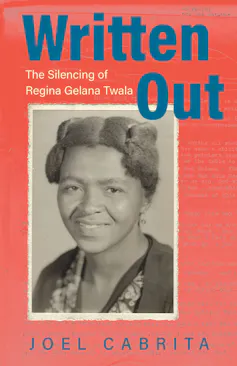
Twala’s life exemplifies the fortunes of an elite black class in South Africa whose aspirations were squashed as the century wore on. For a brief period, unable to find employment, she worked as a domestic servant in a white household. When the racist apartheid government was voted into power in 1948, Twala became involved in anti-apartheid politics. She joined the African National Congress and was arrested in 1952 for her part in the Defiance Campaign, a non-violent resistance movement. Two years later she exiled herself to neighbouring Eswatini (her husband, Dan Twala, was from there).
Regina Gelana Twala was a writer, anthropologist, social worker and political activist who lived in both South Africa and Eswatini (then Swaziland). She died in 1968 at the age of 60. Twala broke the mould of what black women were meant to represent. She was just the second black woman to graduate from Johannesburg’s University of the Witwatersrand (in 1948) and the first to graduate in social science in South Africa. In a period dominated by male intellectuals, she was a formidable writer and thinker. One of few female contributors to southern African newspapers, she wrote hundreds of articles. Her prolific output includes as many as five book manuscripts, almost all lost as Twala struggled to be published due to the racist gatekeeping mechanisms of apartheid-era South Africa.
Twala stood at the forefront of politics in both South Africa and Eswatini. She spoke out loudly, braving the censure of men who preferred women to be quiet and in the home. Her personal life was as noteworthy as her public persona. Twice married, she bucked the shaming conventions of the day that stigmatised divorced women. She rejected her unfaithful first husband and sought a love union with sporting figure Dan Twala. Disillusioned after 20 years of marriage, she chose to live separately as an independent woman until her death from cancer. Twala, moreover, left a uniquely intimate record of her life. She exchanged hundreds of love letters with Dan over 30 years, one of the most remarkable collections of letters in African history. They are filled not only with personal details but also political commentary. She was close to figures like former South African president Nelson Mandela, who represented her in her divorce.
What impact did she have in Eswatini?
Twala moved to Eswatini at a key moment in the country’s life. She had received a prestigious Nuffield Fellowship that allowed her to pursue anthropological research into how women were responding to the country’s massive cultural shifts. The monarch Sobhuza II was increasing pressure on Britain for independence. Swaziland’s middle class (in whose company Twala found herself) allied with Sobhuza. The country’s first political party, the Swaziland Progressive Party, was formed by them in 1960. Twala was a founding member and its first women’s secretary. She attended pan-African gatherings in Ghana with then-president Kwame Nkrumah. Her career reminds us that women were also key players in early anti-colonial politics.
Beyond formal politics, she advocated for women’s education and self-help, starting a crafts organisation and founding the first library for black readers in her home town. Eswatini has one of the largest gender disparities in the world and Twala’s vision remains as sadly relevant today as in the 1950s. As an anthropologist, she was critical of those who weaponised African culture to keep women in their place. Her relationship with Sobhuza soured in the 1960s as she became disillusioned with his suppression of the democratic process. She used her pen for scathing critiques of the powerful and wealthy in Eswatini, mobilising the press to advocate for ordinary people – most of all women.
Why has history forgotten her?
Twala’s radical politics undoubtedly contributed to her erasure. Her criticism of the Swati monarchy meant she was steadily sidelined from politics. On her deathbed, she pushed hard to have her final work – a study of Swati women – published to coincide with Eswatini’s 1968 independence. Figures close to the king blocked it. Eswatini became – if anything – even more repressive and outspoken anti-royalist women weren’t going to be celebrated as pioneering anti-colonial figures. She’s also been forgotten due to the gatekeeping exercises of territorial white academics. Prominent anthropologists and historians taught and mentored her but were less supportive once she outgrew their patronage.
A case in point is renowned anthropologist Hilda Kuper. Their close relationship soured as Twala became increasingly critical of white liberal academics and their pretensions to “own” their research sites and subjects. After Twala’s death, Kuper effectively squashed the publication of Twala’s final manuscript, declaring it of little intellectual value. It gathered dust in Kuper’s archives in the US until I discovered it 60 years later. Swedish historian Bengt Sundkler paid Twala to research African religion. Her work on indigenous Zionist churches was diligently sent. Two decades later, Sundkler would publish these notes as his own in an act of plagiarism. He is remembered as a leading scholar; her contribution was erased.
Why is it important that we remember her?
Twala reminds us that we should not take the seeming absence of women from the historical record at face value. Silences have their own story to tell. The story as to why women are not numbered among the luminaries of their times is complex and deserves careful unpacking.
Mai Musodzi Chibhaga Ayema (1885-1952)
 Mai Musodzi
Elizabeth Maria “Mai” Musodzi Ayema MBE (born Musodzi Chibhaga, c. 1885–1952) was a Zimbabwean feminist and social worker from Salisbury.
Elizabeth Maria “Mai” Musodzi Ayema was born around 1885 near Salisbury (now Harare) in the upper Mazowe valley to parents Chibhaga and Mazviwana. Her aunt was Shona spiritual leader Nehanda Nyakasikana. She and her siblings were orphaned following the 1896–1897 anti-colonial rebellions against the British South Africa Company. They then lived with their uncle at the Jesuit mission Chishawasha. Musodzi was baptised Elizabeth Maria in 1907. She married Zambian BSA police sergeant Frank Kashimbo Ayema in 1908. Musodzi helped found the Harare African Women’s Club in 1938. She led the organisation, which provided mutual aid, offered services and classes for women, and lobbied for a maternity clinic staffed by Red Cross-trained women. Musodzi also supported women’s rights in her roles on the Native Advisory Board and the National Welfare Society’s African committee. She worked against the eviction and arbitrary arrests of women as well as humiliating examinations for sexually transmitted infections. In the 1940s she formed the sodality group Chita chaMaria Hosi yeDenga (The sodality of Mary Queen of Heaven) with Berita Charlie and Sabina Maponga. She was the leader of the group and earned the appellation Mai (Mother).[5]
In April 1947 Musodzi was awarded an MBE (Member of the Most Excellent Order of the British Empire) and was among select guests invited to dine at the Government House with Queen Elizabeth The Queen Mother and the royal family. During the royal dinner, she refused to sit at the table reserved for African notables, instead finding her seat on the floor. Musodzi died on 21 July 1952. Salisbury Location’s Recreation Hall in Mbare was renamed Mai Musodzi Hall in her honour. Historian Tsuneo Yoshikuni published the book Elizabeth Musodzi and the Birth of African Feminism in Early Colonial Africa in 2008.
Priscilla Ingasiani Abwao (1924 – November 13, 2009)
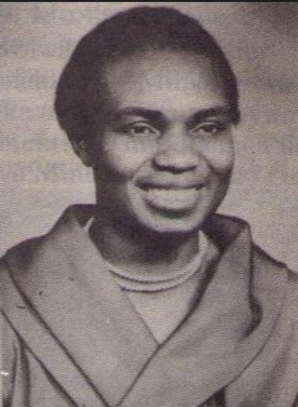
Priscilla Ingasiani was a Kenyan social worker and advocate for women’s rights, a freedom fighter, and the first African woman to serve on the Legislative Council in 1961 in Kenya. Abwao took part in the talks that led to the country’s independence (Kamau, 2010)
Priscilla Ingasiani Abwao (1924 – November 13, 2009) was a Kenyan advocate for women’s rights, freedom fighter, and the first African woman to serve on the Legislative Council in 1961 in Kenya. The Kenya African Women’s League forwarded names of two African women — Margaret Kenyatta, daughter of founding President Jomo Kenyatta, and Priscilla Ingasiani Abwao, a social worker and gender rights activist — to the colonial governor for nomination to the Legislative Council. The governor picked Priscilla Abwao, making her the first African woman to sit in the Legco. Literature around Abwao projects her as remarkable woman; a principled advocate for women’s rights, freedom fighter and trail-blazer with an indomitable spirit to succeed.
Abwao died on November 13, 2009, at the age of 85.
Winnie Madikizela-Mandela 1936–2016
She trained at the Jan Hofmeyr School of Social Work beginning 1953 and finishing in 1955. This was the same college attended by Regina Gelana Twala and Joshua Nkomo in Johannesburg.

Nomzamo Winifred Zanyiwe Madikizela was born, the fifth of nine children, in the village of Mbongweni, Bizana, in the Transkei on 26 September 1936. During her infant years her father, Columbus, was a local history teacher. In later years he was the minister of the Transkei Governments’ Forestry and Agriculture Department during Kaizer Matanzima‘s rule. Her mother, Nomathamsanqa Mzaidume (Gertrude), was a science teacher.
In 1953, upon her father’s advice, Winnie was admitted to the Jan Hofmeyr School of Social Work in Johannesburg, where Nelson Mandela (who was already gaining national renown), was the patron. It was the first time she left the Transkei and a formative moment in her life. It was in Johannesburg that she saw the full effects of Apartheid on a daily basis, but also where she discovered her love of fashion, dancing and the city. It was only after a few months of living in Johannesburg that Winnie first went to Soweto. She completed her degree in social work in 1955, finishing at the top of her class, and was offered a scholarship for further study in the USA. However, soon after receiving the scholarship offer, she was offered the position of medical social worker at the Baragwanath Hospital in Johannesburg, making her the first qualified, Black member of staff to fill that post. Following an agonising decision about whether to leave and further her academic career in the USA, or to stay and pursue her dream of becoming a social worker in South Africa, she decided to remain in South Africa.
Whilst working at the hospital, Winnie’s interest in national politics continued to grow. She moved into one of the hostels connected to the hospital and found that she was sharing a dormitory with Adelaide Tsukudu, the future wife of former African National Congress (ANC) president, Oliver Tambo. Indeed, Adelaide would confide in Winnie while they were in bed at night about the brilliant lawyer she would soon marry, and his legal partner, Nelson Mandela. It also transpired that Tambo happened to be from Bizana, like Winnie, making them members of the same extended family. It is worth reiterating that Winnie was already politically interested and involved in activism long before she met her future husband. She was particularly affected by the research she had carried out in Alexandra Township as a social worker to establish the rate of infantile mortality, which stood at 10 deaths for every 1,000 births.During her time at Baragwanath, Winnie’s reputation began to grow, with stories and photographs about her appearing in newspapers, acknowleging the achievement of this girl from Pondoland who came to Johannesburg and looked to be making a name for herself.
Marriage to Nelson
Winnie was twenty two when she met Nelson, and he was sixteen years her senior. He was already a famous anti-apartheid figure and one of the key defendants in the Treason Trial, which had commenced the year before, in 1956. From the very beginning, Nelson was ensconced in the Liberation Struggle, and the parameters of their romance were set by his commitment to political change. On March 10 1957, Nelson asked Winnie to marry him and they celebrated their engagment together in Johannesburg on 25 May 1958. Despite government restrictions on the movements of Treason Trial defendents, Winnie and Nelson got married on 14 June 1958, in Bizana. The celebration caught the national interest and was reported in publications such as Drum Magazine and the Golden City Post. Their marriage was to prove both robust and fraught. Winnie quickly discovered that life married to one of Apartheid’s most famous opponents was a lonely one. Her husband was incessently busy with ANC meetings, legal cases and the Treason Trial. The Mandela residence was also a site for frequent police raids, during which policemen would awaken the household with loud banging on the doors in the early morning and set to turning the whole house upside down. Added to the turbulence of their early married life, in July, Winnie found out she was pregnant with her first child.
In October 1958, Winnie took part in a mass action which mobilised women to protest against the Apartheid government’s infamous pass laws. This protest in Johannesburg followed a similar action that had taken palce in Pretoria in August 1956. The Johannesburg protest was organised by the president of the ANC Women’s League, Lilian Ngoyi and Albertina Sisulu, amongst others. In fact, Winnie travelled with Albertina from Phefeni station in Orlando to the city centre where the protest was taking place. During the protest, the police arrested 1000 women.
A decision was taken by the arrested women not to apply for immediate bail, but to rather spend two weeks in prison as a sign of further protsest. During these weeks, the pregnant Winnie saw first hand the squalid conditions of South African prisons, and her commitment to the struggle only intensified. Eventually, Nelson and Oliver Tambo were called to arrange their bail, and the ANC raised money to pay the convicted women’s fines. It was an event which took Winnie out of her husband’s considerable shadow in eyes of the public, but also one which alerted national security to her potency as a voice of political dissent – independent of her famous husband. Shortly afterwards she was sacked from her post at Baragwanath hospital. Following the trauma of incarceration, on February 4 1959 Winnie gave birth to a daughter she named Zenani.
Winnie’s Influences
Winnie had a few influential presences in her life: chief amongst them were Lillian Ngoyi, who, along with Helen Joseph, were the only two women accused in the Treason Trial; Albertina Sisulu; Florence Matomela; Frances Baard; Kate Molale; Ruth Mompati; Hilda Bernstein (who was the first Communist Party member to serve on the Johannesburg Council in the 1940s); and Ruth First. These were people who Winnie was able to consider not only as sources of inspiration, but as trusted confidantes. This is significant, because as Winnie’s struggle against government continued, her inner circle became consistantly infiltrated by people who would gain her trust as allies, only to reveal themselves later as spies. As Nelson spent increasing amounts of time in police custody or underground, the number of unsettling relationships Winnie established with people who would turn out to be police informants also seemed to increase. As Bezdrob has written about Johannesburg at the time, it was “a cesspool of informers” and unfortunately for Winnie, she appeared to be surrounded by spies.
Winnie Madikizela-Mandela remains an enigmatic figure in South African society and history. It has been speculated that like so many South Africans traumatised by the brutality of life under Apartheid, Winnie may have long suffered from Post Traumatic Stress Disorder and her actions ought to be understood in light of this. Despite her occasionally “morally ambiguous” behaviour, Winnie is someone whose commitment to justice and the downtrodden has seldom been in doubt, though her means of achieving her goals have drawn justifiable scrutiny.
Aïcha Chenna (August 14, 1941 – September 25, 2022)
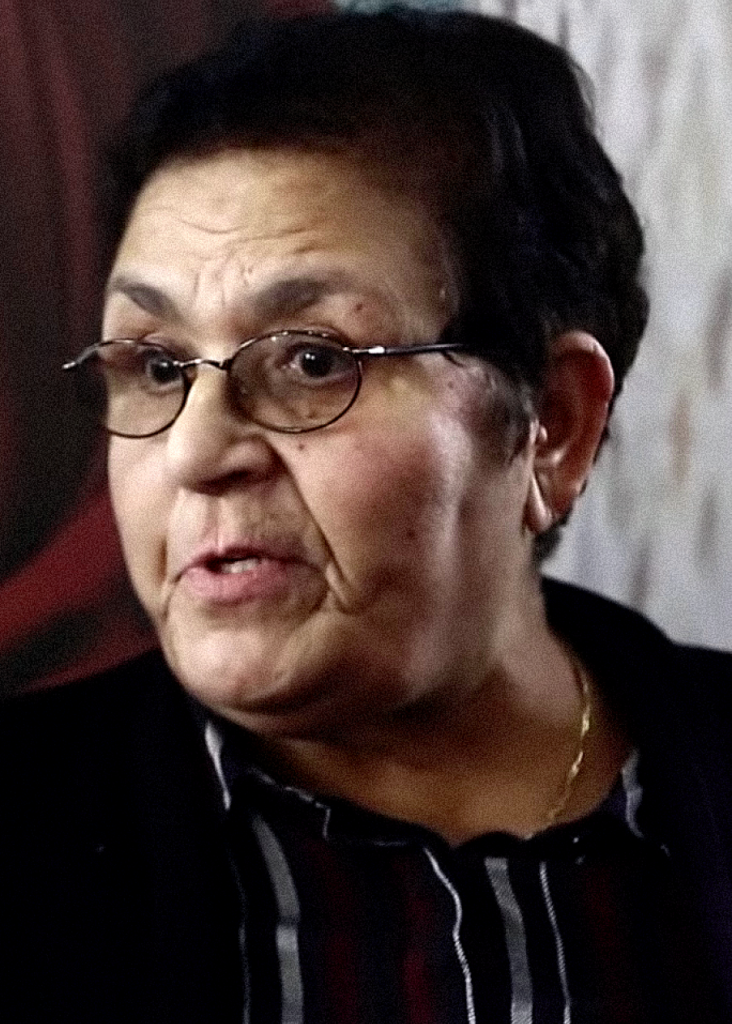
She was a Moroccan social worker, nurse, women’s rights advocate, and activist who worked with disadvantaged women and founded the Association Solidarité Féminine (ASF) in 1985, in Casablanca.

Sunday 25 September 2022 – 13:00
Aicha Chenna, the iconic women’s rights advocate and activist passed away on September 25 aged 81, leaving behind a strong women’s rights legacy in the Kingdom. Chenna was first known for her work in areas subject to social and religious taboos as an employee of the Ministry of Health. She then took over advocating for single mothers and made it a life battle to grant these ladies the rights they do not dispose of. Chenna fought for the status of illegitimate and abandoned children and of incest victims. This ambassador of the feminist cause in Morocco has dedicated more than half of her life to supporting single mothers and abandoned children. Born in Casablanca in 1941, Aïcha Chenna left to live in Marrakech before returning to Casablanca in 1953. Fatherless, she studied nursing and then worked as a health and social education animator. In 1985, she founded the Association Solidarité féminine (ASF) for the defense of women’s rights and abandoned children. It was the first association in Morocco to offer training and literacy courses to give financial and professional independence to single mothers rejected by their families and by society.
Aicha Chenna’s activism, recognized at the national and international level, has been supported by King Mohammed VI. She said: “The King has shown me his blessing and has given me the key to the success of my mission. His encouragement, his high concern and his magnanimous gestures strengthen my conviction and give me every day the strength and courage to continue.” Conservatives did not agree with what she promoted, and she received constant criticism due to her pro-choice convictions. The advocate and emblematic Moroccan figure helped hundreds of women, single mothers and “illegitimate” children lead a normal life, in a society that rejects and belittles them. She was awarded for her remarkable work of activism back in 2009, when she won the USD 1 million Opus Prize, which she said would be used to ensure that her foundation, The Social Solidarity Foundation, carries on its work even after her death. Initially run out of a basement in Casablanca, her foundation helps women that are victims of abuse and single mothers. Chenna trained them to reintegrate society so that they would secure their financial and professional independence. She will always be remembered for her work and will remain an icon of feminism and activism in Morocco and beyond.
Moroccan women’s rights advocate Aicha Chenna passes away, age 81
Emily Hobhouse
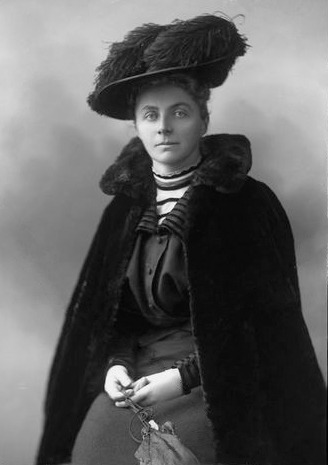
Emily Hobhouse was a British social worker known for helping women and children in South Africa. During the Boer War (1899–1902) British soldiers took many Boer women and children from their homes and placed them in concentration camps. Hobhouse worked to improve conditions for those women and children.
Emily Hobhouse arrived in Cape Town on 27th December 1900. When she had left England, she only knew about the concentration camp at Port Elizabeth, but learnt that there were 34 camps in operation. Hobhouse had a letter of introduction to Alfred Milner from her aunt, the widow of the Permanent Under Secretary at the Home Office. From Milner she obtained the use of two railway trucks, but their use was subject to Lord Kitchener’s approval. She received Kitchener’s permission two weeks later but was restricted to visiting Bloemfontein and she could take only one truck of supplies for the camps, about 12 tons. She left Cape Town on 22nd January 1901 and arrived at Bloemfontein within two days. The camp there housed some 1,800 people. Emily reported “that there was a scarcity of essential provision and that the accommodation was wholly inadequate.” At that time soap was listed by the authorities as a luxury but she succeeded in having it reclassified as a necessity.
Extending her visit beyond Bloemfontein, she visited camps to the south of Bloemfontein, including Norvalspont, Aliwal North, Springfontein, Kimberley and Orange River. She also visited Mafikeng. Her tour brought her back to Bloemfontein in March 1901. Within the two months since her first visit, the camp population had grown and she was shocked by what she found. She later wrote “The population had redoubled and had swallowed up the results of improvements that had been effected. Disease was on the increase and the sight of the people made the impression of utter misery. Illness and death had left their marks on the faces of the inhabitants. Many that I had left hale and hearty, of good appearance and physically fit, had undergone such a change that I could hardly recognize them.”
Emily returned to England to raise the issues with the Marquess of Salisbury and his government but there was little support from either. She wrote “The picture of apathy and impatience displayed here, which refused to lend an ear to undeserved misery, contrasted sadly with the scenes of misery in South Africa, still fresh in my mind. No barbarity in South Africa was as severe as the bleak cruelty of an apathetic parliament.” Her book on the Boer War was written in France. Emily did receive more popular support and this forced the government to set up a committee of women headed by Millicent Fawcett. Emily believed the committee was biased in favour of the government’s position and she herself was not invited to be a member. The members of the committee visited the camps for themselves between August and December 1901, concluded that they agreed with Hobhouse’s original report and recommended improvements.
With action being taken at home, Hobhouse returned to South Africa. The authorities were fearful of her visit and she was refused permission to visit the camps. Her ship docked in Cape Town on Sunday 27th October 1901 but she was not allowed to disembark. Her own health deteriorating, she recuperates in the mountains of Savoy and heard from there that the war had ended. During post-war visits, Hobhouse set up schools to help young people learn practical skills. In 1921 the people of South Africa raised £2,300 in recognition of the work she had done for their people. The money was sent to her with a request that she had to buy a small house for herself in Cornwall. On 18th May 1921, she replied saying “I find it impossible to give expression to the feelings that overpowered me when I heard of the surprise you had prepared for me. My first impulse was not to accept any gift, or otherwise to devote it to some or other public end. But after having read and reread your letter, I have decided to accept your gift in the same simple and loving spirit in which it was sent to me.” She purchased a house at St. Ives in Cornwall.
She died in London on 8th June 1926. Her ashes were placed in the Women’s Memorial at Bloemfontein and a town in Eastern Free State was named Hobhouse.
Nnoseng Ellen Kate Kuzwayo (29 June 1914 – 19 April 2006)
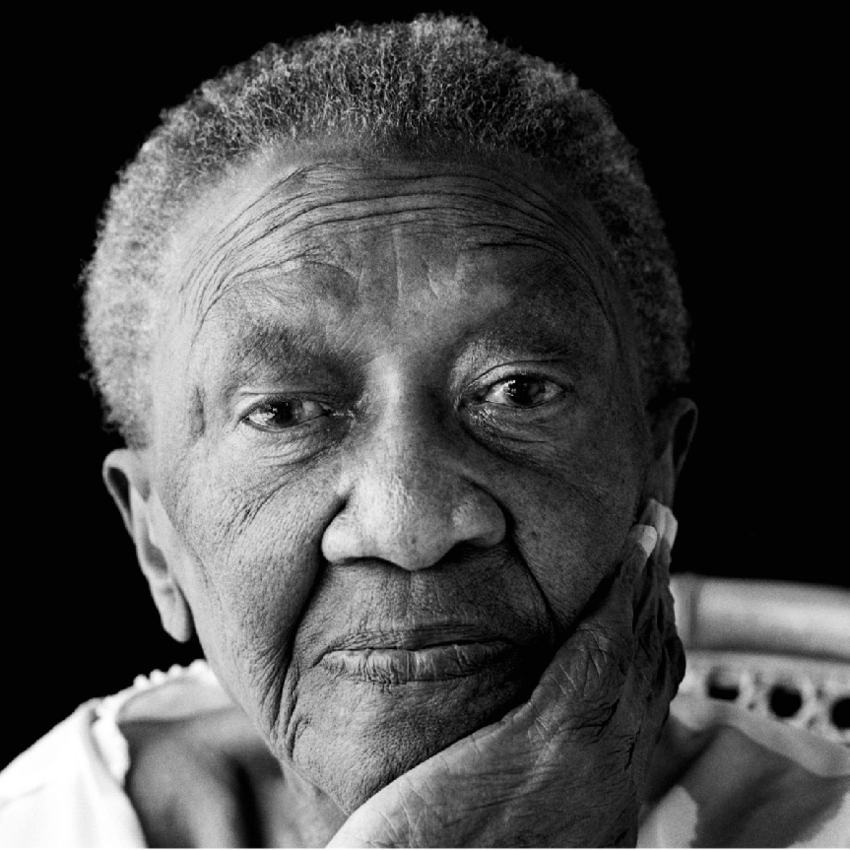
Mama Ellen Kizwayo was a South African women’s rights activist and politician, who was a teacher from 1938 to 1952. She was president of the African National Congress Youth League in the 1960s. In 1994, she was elected to the first post-apartheid South African Parliament. Her autobiography, Call Me Woman (1985), won the CNA Literary Award.
Born Nnoseng Ellen Serasengwe, in Thaba ‘Nchu, Orange Free State, Kuzwayo came from an educated, politically active family. Her maternal grandfather, Jeremaiah Makgothi, was taken by his mother from the Orange Free State to the Cape to attend the Lovedale Institute, circa 1875. He qualified as a teacher and also worked as a court interpreter and a Methodist lay preacher. Makgothi was the only layman to work with Robert Moffat on the translation of the Bible into Setswana. Makgothi and Kuzwayo’s father, Philip S. Mefare, were active in politics. Makgothi was secretary of the Orange Free State branch of the South African Native National Congress, Mefare a member of its successor, the African National Congress.
Education and career
Kuzwayo began her schooling at the school built by Makgothi on his farm in Thabapatchoa, about 12 miles from Tweespruit, Orange Free State. She attended Adams College, Amanzimtoti,[3] and then undertook a teacher training course at Lovedale College in Fort Hare, graduating at the age of 22 and beginning a teaching career.[4] She married Ernest Moloto when in her late twenties, and the couple had two sons, but the marriage was not a happy one, and after suffering abuse from her husband she fled to Johannesburg. She had a part as a shebeen queen, alongside Sidney Poitier in the 1951 film Cry, the Beloved Country. After her first marriage was dissolved, she married Godfrey Kuzwayo in 1950.She worked as a teacher in the Transvaal until 1952, giving up teaching on the introduction of the Bantu Education Act, 1953, which cut back opportunities for black education. She then trained as a social worker (1953–55).
In the 1940s, she served as secretary of the ANC Youth League. After the 1976 Soweto uprising, she was the only woman on the committee of 10 set up to organise civic affairs in Soweto, and her activities led to her detention for five months in 1977–78 under the Prevention of Terrorism Act. She would recount her arrest in her 1996 testimony to the Truth and Reconciliation Commission.[1] Her other community activism included serving as the president of the Black Consumer Union of South Africa and the Maggie Magaba Trust. On the 1985 publication of her autobiography, Call Me Woman, in which she described being beaten by her husband, Kuzwayo became the first black writer to win South Africa’s leading literary prize, the CNA Award. After Nelson Mandela was inaugurated as South African president in 1994, Kuzwayo became a member of the country’s first multiracial Parliament, aged 79, and served for five years until June 1999, when she was South Africa’s longest-serving parliamentarian. With director Betty Wolpert, Kuzwayo was involved in making the documentary films Awake from Mourning (1982) and Tsiamelo –– A Place of Goodness (1983) which drew on the story of the dispossession of her family’s farmland.
Kuzwayo died in Johannesburg, aged 91, of complications from diabetes, survived by her sons, Bobo and Justice Moloto, grandchildren and great-grandchildren.
Kuzwayo died in Johannesburg, aged 91, of complications from diabetes, survived by her sons, Bobo and Justice Moloto, grandchildren and great-grandchildren.
Victoria Fikile Chitepo (March 27, 1928 – April 8, 2016)
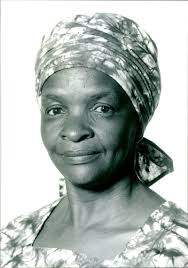
Victoria Fikile Chitepo (27 March 1928 – 8 April 2016) was a South African – Zimbabwean politician, activist and educator. She was the wife of Herbert Chitepo, a leading figure in the Zimbabwe African National Union (ZANU), but was a major political figure in her own right and served as a minister in the government of independent Zimbabwe between 1980–1992.
She was born as Victoria Mahamba-Sithole in the South African coal-mining town of Dundee in KwaZulu-Natal. She was educated in South Africa and attended the University of Natal, where she was awarded a B.A. degree, and took a postgraduate degree in education at the University of Birmingham in the UK. She met her future husband, Herbert, at Adams College near Durban in South Africa. Between 1946 and 1953 she taught in Natal, but moved to what was at the time the British colony of Southern Rhodesia in 1955 after she married her Zimbabwean husband, who was working as a social worker in the capital Salisbury (now Harare). In 1960, Chitepo became involved with the National Democratic Party, a nationalist movement that campaigned for political rights for Rhodesia’s disenfranchised black majority. She led a women’s sit-in at Salisbury’s Magistrate’s Court in 1961 to promote the campaign for black citizenship.
A year later, she went with her husband to Tanganyika (now Tanzania) and worked as a social worker aiding black Rhodesian refugees in Dar es Salaam for three years, between 1966 and 1968. In 1975, Herbert Chitepo was assassinated in Lusaka, Zambia by agents of the Rhodesian government. She remained in Tanzania until Rhodesia – renamed Zimbabwe – gained its independence and black majority rule was established in 1980. On returning to Zimbabwe, Victoria Chitepo stood for election in the constituency of Mutasa and Buhara West in the country’s first multiracial elections. She won a seat for ZANU-PF in the lower chamber, the House of Assembly. She was appointed as Deputy Minister of Education and Culture and subsequently as Minister of Information and Education by the then Prime Minister, Robert Mugabe. In 1982 she was appointed Minister of National Resources and Tourism. She stood again for election in the 1985 election and was both re-elected and re-appointed to her ministerial position, which she retained until 1990. She then took on the role of Minister of Information, Posts and Telecommunications before retiring in 1992.Throughout 1990 and 1992 she was very fond of working with the government of John Major, saying that meetings with British officials were always pleasant and constructive. She said British officials were “always polite and always on time” and adding that French officials were “generally neither.”
Chitepo came out of retirement in 2005 when she stood again on the ZANU-PF ticket for the parliamentary seat of Glen Norah in Harare. Although she lost the election, she remained a senior member of ZANU-PF’s ruling body, the politburo, and was targeted by United States sanctions against persons “undermining the democratic processes in Zimbabwe”. She was also sanctioned by Portugal, Spain, France, Germany, Belgium, Italy, the Netherlands, Luxembourg, Denmark, Sweden, Norway, Switzerland and the Republic of Ireland. Notably she was not sanctioned by the United Kingdom. In 2014, she was removed from the United States sanctions list.
She later worked in government until her death on April 8, 2016.
Mame Seck Mbacké (October 1947 – December 24, 2018)
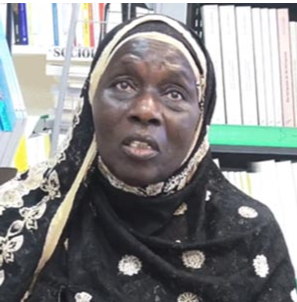
Mame Seck Mbacké (October 1947 – December 24, 2018) was a Senegalese writer. She wrote in French and in Wolof.
Mame Seck Mbacké was born in Gossas. Mbacké studied Social and Economic Development at the Institute of Higher International Studies in Paris. She worked as a diplomat in France and Morocco, then as a social worker at the Senegalese consulate in Paris. In Paris, she completed an International Relations degree at the Sorbonne and post-graduate studies in public health and nutrition at the Pantheon-Sorbonne University. She later worked for the Ministry for Foreign Affairs in Dakar. Her short story “Mame Touba” was included in the anthology Anthologie de la Nouvelle Sénégalaise (1970–1977). Mbacké established the publishing house Éditions Sembene in 2006. In 1999, she received the Premier Prix de Poésie from the Ministry of Culture of the Republic of Senegal.
Selected works
- Le chant des Séanes, poetry (1987)
- Poèmes en Etincelles, poetry (1999)
- Pluie – Poésie Les Pieds Sur La Mer, poetry (2000)
- Le Froid et le Piment, novel (2000)
- Qui est ma Femme?, play (2000)
- Les Alizés de la Souffrance: Poèmes, poetry (2001)
- Lions de la Teranga: L’Envol Sacré, poetry (2006)
Social workers are World Changers!
_____________________________________________________________________________________________________
Sources:
https://theconversation.com/regina-twala-was-a-towering-intellectual-and-activist-in-eswatini-but-she-was-erased-from-history-197540
https://kids.britannica.com/kids/article/Emily-Hobhouse/602052
https://en.wikipedia.org/wiki/Mame_Seck_Mback%C3%A9
https://en.wikipedia.org/wiki/Victoria_Chitepo
https://en.hespress.com/49972-moroccan-womens-rights-advocate-aicha-chenna-passes-at-the-age-of-81.html
https://www.sahistory.org.za/people/winnie-madikizela-mandela
https://en.wikipedia.org/wiki/Charlotte_Maxeke
https://africasocialwork.net/africas-10-great-women-social-workers-born-between-1871-and-1947/
https://en.wikipedia.org/wiki/Mai_Musodzi