
At the Crossroads of Care: When Social Work Meets Indigenous Knowledge Systems.
On paper, the process of care appears orderly and coherent. A client presents, an assessment is conducted, a care plan is developed, and interventions are implemented. It is a system built on structure, documentation, and measurable outcomes. Yet, in practice, the lived realities of care in South Africa rarely conform to this linear model
What is written in reports and case files often tells only a partial story – one that is clinically sound, but not always contextually complete.
I was reminded of this in a consultation with a family whose son had been referred for behavioural concerns. His presentation followed a familiar trajectory: withdrawal from family life, escalating aggression, substance use, and eventual engagement with social services and rehabilitation programmes. By the time I encountered the case, multiple interventions had already been attempted. Progress had been noted, but it was inconsistent, and the family remained unsettled.
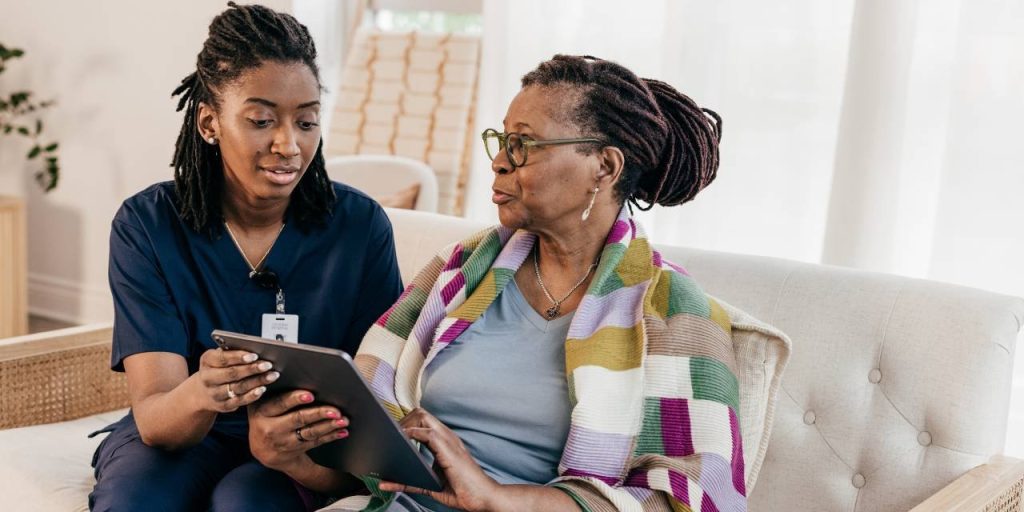
It was during a quiet moment, away from the formalities of structured assessment, that the mother spoke candidly. She explained that they had not shared everything with the social worker. Not because they were withholding information maliciously, but because they felt certain aspects of their experience would not be understood. There was a concern, subtle but powerful, that speaking openly about their interpretations might invite judgement or dismissal. In that moment, it became clear that the official narrative of the case and the lived narrative within the home were not aligned.
Within the family, the onset of the young man’s behaviour was not seen as random. It was traced back to a moment of disruption: the passing of a grandfather, after which “things were no longer right.” The language used to describe the situation drew from Indigenous diagnostic frameworks: references to imikhokha, to unsettled presences, to patterns that felt inherited rather than incidental. Family members began to recognise behaviours that echoed across generations –
substance use, instability, a repetition of unresolved patterns. What might be framed clinically as addiction or behavioural disorder was, within the household, understood as continuity; an extension of something that had not been resolved in the past.
This framing is not uncommon. In many of the cases I encounter, families interpret behavioural disturbances, substance dependency, or even domestic violence through relational and ancestral lenses. These are not abstract beliefs, but structured ways of making sense of recurring patterns within families. Individuals themselves sometimes articulate this experience with striking clarity, describing a sense that their actions are not entirely self-contained, but linked to something beyond them; something inherited, unfinished, or unresolved.
What is particularly significant is that these interpretations are often not disclosed within formal care processes. Families make calculated decisions about what to share and what to withhold. Concerns about stigma, professional judgement, or being misunderstood lead to a form of narrative management, where certain dimensions of the problem remain unspoken. As a result, the assessment captures one version of reality, while another continues to exist alongside it, unacknowledged but highly influential.
Parallel to formal intervention, many families initiate their own processes of care. Consultations with abelaphi bendabuko take place, sometimes discreetly, sometimes as a primary response. Within these engagements, the diagnostic lens shifts. The focus moves toward identifying root relational disturbances, whether linked to ancestral obligations, unresolved familial dynamics, or disruptions in spiritual alignment. In some instances, specific processes such as ukulahlwa are undertaken to address what is understood as the underlying cause.
These interventions are rarely documented within formal systems, yet they play a central role in how families engage with healing.
The difficulty arises when these parallel systems do not intersect. Social work interventions proceed based on psychosocial frameworks, while Indigenous healing processes unfold according to their own logics and timelines.
Each system addresses a dimension of the problem, but without coordination, the overall response remains fragmented. The client becomes the point of convergence, moving between systems that do not fully recognise each other, attempting to reconcile meanings that are never formally integrated.
Part of the challenge lies in the assumption of linearity within formal care models. There is an expectation that problems can be assessed, diagnosed, and resolved in a sequential manner. However, Indigenous frameworks often operate differently. They emphasise continuity rather than sequence, relationship rather than isolation, and cycles rather than endpoints. Within this orientation, the concern is not only the immediate presentation of behaviour, but its origins and its potential to persist across generations if left unaddressed. The idea that unresolved disturbances may continue to manifest within family systems introduces a dimension that extends beyond the scope of many conventional intervention models.
This does not render social work ineffective, far from it. Social workers play a critical role in addressing structural vulnerability, providing psychosocial support, and ensuring the safety and wellbeing of individuals and families. However, there remains a pedagogic gap in how practitioners are prepared to engage with Indigenous Knowledge Systems in a manner that is both rigorous and contextually appropriate. Without this capacity, practitioners may either exclude these frameworks entirely or engage them informally, without clear methodological grounding.
At its core, this is a question of epistemic legitimacy. It requires us to consider which forms of knowledge are recognised within formal systems of care, and which are positioned at the margins. Indigenous diagnostic frameworks are often treated as peripheral, yet they continue to shape how many South Africans understand health, illness, and healing. To ignore them is not to eliminate their influence, but to render them invisible within professional practice.
A more responsive approach does not require the merging of disciplines or the abandonment of professional standards. Rather, it calls for a form of epistemic literacy – an ability to recognise, interpret, and appropriately engage with multiple frameworks of understanding. For social workers, this means developing the capacity to listen not only for clinical indicators, but for the underlying logics through which clients and families make sense of their experiences.
What becomes clear, over time, is that the current system relies heavily on clients to perform the work of integration. They navigate between social workers, psychologists, and Traditional Health Practitioners, carrying insights from one space to another, often without support in reconciling them. This silent labour of integration is rarely acknowledged, yet it is central to how care is actually experienced.
The future of care in South Africa will not be defined by a single system. It will emerge from the interaction of many: formal and informal, clinical and cultural, structured and relational. The question is not whether these systems will coexist; they already do. The question is whether we are prepared to engage that coexistence with honesty, intellectual seriousness, and a commitment to more integrated forms of care.
Until then, the client remains at the crossroads – moving between worlds, holding together what our systems have yet to fully reconcile.
Glossary of Indigenous Terms;
(For: At the Crossroads of Care: When Social Work Meets Indigenous Knowledge Systems)
The following terms reflect Indigenous diagnostic and healing frameworks that shape how many South African families understand health, behaviour, and well-being.
- Abelaphi Bendabuko
Traditional healers or Indigenous health practitioners. These are individuals recognised within communities for their role in diagnosis, healing, and restoring balance through Indigenous Knowledge Systems, including spiritual, relational, and cultural practices.
- Imikhokha
Plural of umkhokha. Refers to signs, disturbances, or manifestations linked to spiritual, ancestral, or relational imbalance. These may present as behavioural, emotional, or situational disruptions understood as carrying deeper meaning beyond individual pathology.
- Makwande
A contextual expression used within certain Indigenous spiritual spaces. It is often associated with a call to expansion, awakening, or deepened awareness, particularly in relation to spiritual insight, personal growth, or ancestral connection. Its meaning may vary depending on context and practitioner interpretation.
- Thokoza
A respectful greeting used within Indigenous spiritual contexts, particularly among Traditional Health Practitioners. It signifies acknowledgement, humility, and connection to the spiritual realm.
- Ukulahlwa
A specific Indigenous healing process or ritual. It refers to acts of spiritual cleansing, release, or restoration, often undertaken to address unresolved ancestral issues, misfortune, or disturbances affecting an individual or family.
Thokoza.