
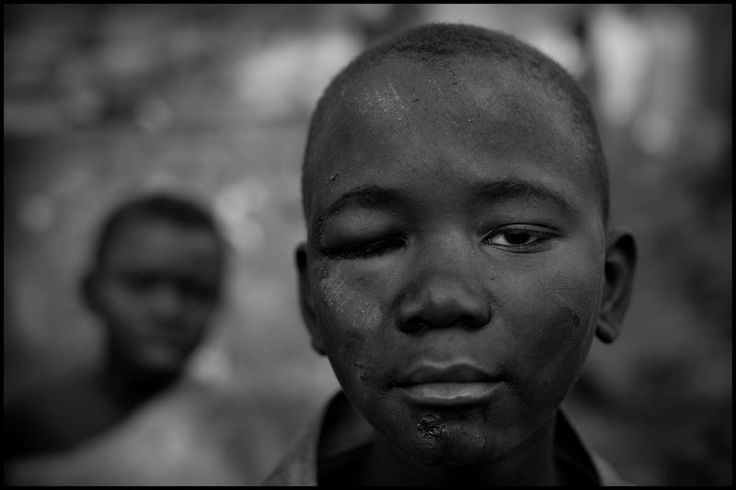
Childhood Traumatic Grief
South Africa, rightly so, just declared Child Protection Week a 365 days a year child protection campaign and called upon all spheres of government and community organizations to heed the call to work together to address and raise awareness around issues affecting children’s daily lives. This ofcause is welcomed, especially because protecting children shouldn’t be reduced to a mere 7 days of social media and community hype, This move is also important primarily because statistically speaking; a significantly higher number of children around the world are reported to be exposed daily to traumatic life-altering experiences.
In South Africa, empirical studies indicate that more than two-thirds of children across all races and socio-economic backgrounds report experiencing a traumatic event before the age of 16. Take the Optimus Study on Child Abuse, Violence, and Neglect in South Africa for example. The study discovered that 42% of South Africa’s children experienced some form of ill-treatment, while 82% have either experienced or witnessed some form of victimization (Optmius Study, 2015, p.11).
As social workers in the behavioral space, we need to realize that real change starts when we’re cognizant of the fact that statistical figures and data refer to literal children and not just numbers. If for example we say, 42% of children in SA experience ill-treatment, 42% is actually almost half of the South African children; think of that for a moment, almost half of our children in SA are experiencing ill-treatment or some form of victimization, that’s an unacceptable statistic. Think about that next time when you see or deal with statistics; it’s not numbers, it’s people.
Cohen et al.,2002 explains Childhood Traumatic Grief as ‘a condition in which trauma-related symptoms interferes with the children’s ability to adequately mourn the loss of a loved one’. It means that a normal grieving episode will be disrupted by traumatic symptoms associated with PTSD or shock as a result of loss.
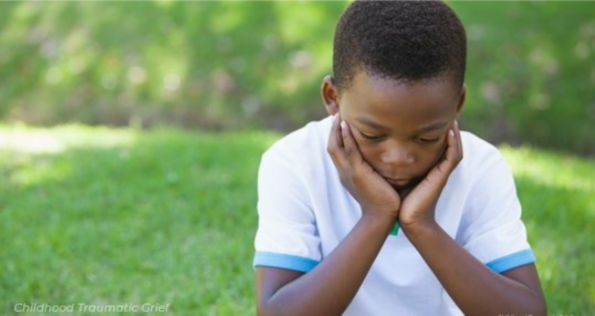
Children Do Grieve Too
When death hits the family, and an attachment figure suddenly dies, everybody in the household is usually given a fair chance to mourn; this ofcause is both necessary and therapeutic, However, the mistake that most parents and families make in times of death in the family is to ignore the feelings and emotions of children in the household. This belief may be due to:
- The general assumption is that children are not affected by death in the same way it affects adults.
- People erroneously believe that the Age of the Child somehow ‘protects’ children from grief, loss, and trauma.
Conversely, some people believe that children cannot be diagnosed with PTSD as they are still young and therefore oblivious to what is currently happening in the household. All this is not scientifically based and is, at worst, expressively incorrect and can be very harmful to children in the long run. Theoretically sound Social Workers will remember that a Systemic Perspective on Loss and Trauma taught us that children, just like adults, do grieve as well (Bowens, 1978), and also, according to the DSM-5, it is possible to diagnose Post-Traumatic Stress Disorder (PTSD) in children.
What exactly is Childhood Traumatic Grief?
Grief is a natural process that follows a period of loss or a painful experience, like when you lose your pet, an attachment figure, a job, etc. Grief in and of itself is not a pathological condition, hence when people are grieving, we need to give them adequate time to do so with no expected time limit. My fourth-year Loss and Trauma Professor used to say that ‘The prescription to grief is grieving’. Grieving is therefore an important and therapeutic process during death and dying in the family. Grief is only pathological when it turns traumatic, and the trauma lingers long and remains unaddressed. Cohen et al.,2002 explain Childhood Traumatic Grief as a ‘condition in which trauma-related symptoms interferes with the children’s ability to adequately mourn the loss of a loved one’. This means that a normal grieving episode will be disrupted by traumatic symptoms associated with PTSD or shock as a result of loss.
To fully understand the subject of Childhood Traumatic Grief, terms such as bereavement, grief, DSM–5, and PTSD must be taken into consideration:
- Grief & Bereavement:
The word ‘grieve’ refers to a Psychological Reaction to bereavement. Bereavement is a state of loss or a period. It involves emotions, thoughts, and feelings towards a stressor or grief-inducing event such as experiencing loss – death and dying. In lay terms, grief is when people are in mourning, heartbroken, or devastated because of a stressor/death, etc. This implies that grief is as psychological as it is emotional.
- DSM-5 and PTSD:
Both these abbreviations are clinical concepts; DSM-5 stands for Diagnostic and Statistical Manual of Mental Health Disorders (DSM-5). In lay terms; DSM-5 is the clinical categorization of mental health disorders and associated symptoms, while PTSD stands for Posttraumatic Stress Disorder. Think of PTSD as the – ‘after-effects’ of something terrible or painful happening in your life such as your parent or beloved sibling suddenly dying, and the ‘after effects’ that has on your mind.
Childhood Ego-Centrism: Children are very Ego-Centric.
Children are very much egotistical; they usually see and can only think of the world from their point of view. They cannot put themselves in other people’s shoes as yet nor can they reason beyond their own viewpoints. Childhood egocentrism also means that children have a much greater sense of guilt & shame, and as such, they tend to blame themselves more often when negative things happen in the house; When death hits the family, and an important attachment figure suddenly dies, children can experience a greater sense of guilt and self-blame, especially if they feel that they were ‘naughty’; they might think to themselves that “it’s because I was a bad child, and mommy said bad things happen to bad children, hence daddy or grandma died, Its because I was naughty.’’
In cases where an attachment figure died while they were in school, some children may tend to hate school, and not do well academically, not because of regression, but because in their minds, it was while they were at school that Granma/daddy died and they couldn’t help, “if I was not at school, she would still be alive today”, and so, most tend to resent school.
Death and Permanency: Irreversibility of Death
In addition to being egotistical, children also do not understand the Irreversibility of Death; this implies that they do not understand how it is that Grandma/Daddy who was here with us yesterday can never be with us ever again. Their Ego does not allow them to think or imagine a world where their attachment figure is not with them anymore. It’s important to note that children have no prior frame of reference as it relates to death and dying. Perhaps what makes death and dying more confusing and traumatic to children is that this is in fact the first time most children experience this process called death, it’s the first time in their young life that they get acquainted with this terrible experience called ‘ceasing to exit’; They don’t know what that is, they cannot comprehend it, it’s a totally new and foreign concept to their young minds, and if we are not careful as parents and guardians, this episode in their lives may the beginning of a protracted battle with trust and attachment issues, especially if there is no prior debriefing session.
Grief as a Pathway to Occultism
I remember seeing a YouTube video while I was still doing my undergraduate studies at the University of the Free State six years ago about a 12-year-old boy from Jamaica who joined the occult because He never dealt with the passing of his father.This boy joined the occult hoping to be reunited with his father who was rumoured to be still alive somewhere under the sea in Jamaica. Such, unfortunately, is sometimes the case with most children around the world who usually turn to occultism to deal with the pain and trauma associated with losing significant attachment figures in their lives, especially if the person dead was their everything. Child debriefing sessions are very important to prevent such from happening to our children.
How to know when your child is battling Childhood Traumatic Grief: Signs of Childhood Traumatic Grief in Children.
For many children battling Childhood Traumatic Grief, noteworthy changes will be evident in their overall demeanor. Childhood Traumatic Grief impacts the child’s emotional, cognitive as well as physiological persona, the following symptoms may be observed:
- Loss of Interest: A diminished interest in school or play activities they previously enjoyed.
- Cognitive Challenges: Poor academic performance in school.
- Separation Anxiety: All of a sudden, a child may no longer want to separate from family members in the house fearing that death or a ‘ghost’ may come and take from her surviving members of the family.
- Lack of Impulse Control: Most children battling CTG have trouble regulating emotions, they are mostly aggressive and display uncontrollable tantrums.
Theoretically sound Social Workers will remember that a Systemic Perspective on Loss and Trauma taught us that children, just like adults, do grieve as well (Bowens, 1979), also, according to the DSM-5, it is possible to diagnose Post-Traumatic Stress Disorder (PTSD) in children.
Children are Resilient
It’s noteworthy to point out that grief, in and of itself is not a problem. Grief is the natural ‘next stage’ that comes after experiencing loss. All humans (and even animals) do grieve when experiencing painful episodes of loss, grief is the natural progression from experiencing pain and shock. As my then fourth year Loss and Trauma Professor, Prof Sandra Ferreira would usually say; ‘‘The prescription to grief is grieving, therefore Grieve’’. Grieving therefore is the most therapeutic thing you can do for yourself. Grieving is good for your overall mental and emotional health. The problem is when grief starts to interfere with one’s ability to mourn adequately, this is when it becomes Traumatic Grief and therefore necessitates immediate grief and trauma therapy, especially for our children.
References:
1. Bowen M., “Family Reaction to Death” in, Family Therapy in Clinical Practice (New York: Aronson, 1978)
2. Burton P, Ward CL, Artz L & Leoschut L (2015) The Optimus study on child abuse, violence and neglect in South Africa. Cape Town: Centre for Justice and Crime Prevention.
3. Cohen, J. A., Mannarino, A. P., Greenberg, T., Padlo, S., & Shipley, C. (2002). Childhood traumatic grief. Trauma, Violence, & Abuse, 3(4), 307–327. https://doi.org/10.1177/1524838002237332
About the Author:
 Aubrey Moeketsi is a qualified Social Worker with a special interest in Clinical Social Work. He is a graduate of the University of Free State. Aubrey works for the Department of Social Development as a social worker. He’s also an editor-in-chief for the YSWN newsletter and the social worker magazine’s online publications. Aubrey Moeketsi is a Clinical Depression & Trauma survivor; and a Founder & Director at YSWN SADC.